
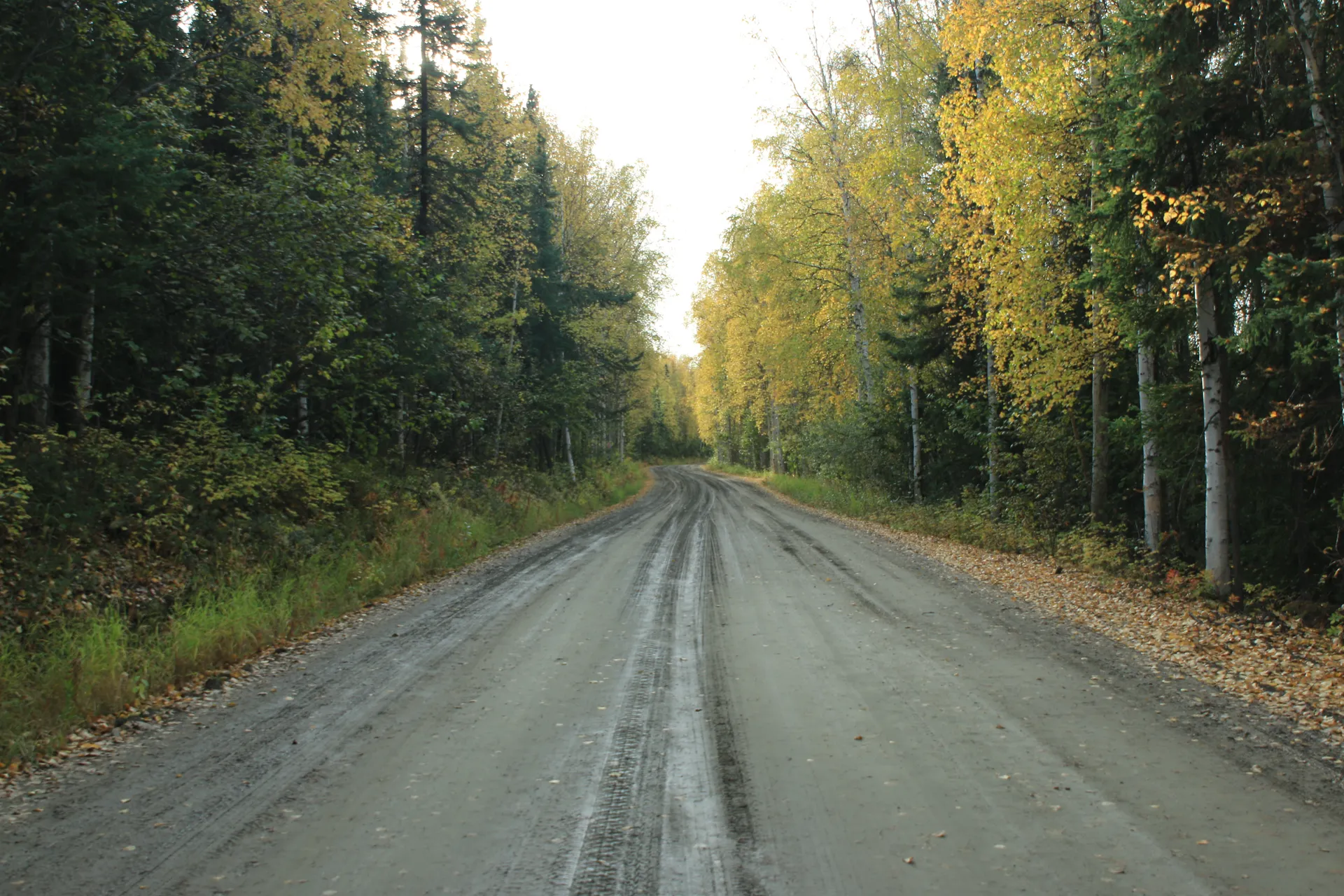
The proposed North Star Grand Lodge project at 301 Henderson Road North would change traffic on Henderson Road. This post covers the numbers, the regulatory process, and who has jurisdiction over what.
Where Things Stand
This project is in early planning. The MOU (available at the bottom of that page) is a proposed framework that hasn't been signed. No Transportation Impact Study has been commissioned, no road improvements have been designed, and no construction has started.
Everything in this post reflects what the project would look like under the proposed framework. The traffic numbers are planning-level estimates based on ITE methodology and comparable venues, not engineering findings. The engineering comes from the Transportation Impact Study, and that study hasn't started. Community input at this stage carries more weight than it will once construction begins.
Henderson Road Today
Henderson Road North near the project site carries about 108 vehicles per day (2025 count). The corridor thins out fast heading west from Gold Hill Road:
| Location | AADT | Year |
|---|---|---|
| Parks Highway at Eva Creek Rd E | 5,212 | 2025 |
| Henderson Rd S at Gold Hill Rd | 564 | 2024 |
| Henderson Rd S at Dome Rd | 102 | 2025 |
| St. Patrick Rd at Henderson N/S | 36 | 2025 |
| Henderson Rd N near project site | 108 | 2025 |
80%+ of Henderson corridor traffic turns off before reaching the NSGL parcel. The site is at the quiet end of a low-volume road.
What the Project Would Add
Non-Event Days
| Source | Estimated Daily Trips |
|---|---|
| Hotel guests (in/out) | 300–500 |
| Employees | 200–350 |
| Restaurant/bar visitors | 50–100 |
| Deliveries and services | 30–60 |
| Day visitors (wellness, activities) | 50–100 |
| Total | 630–1,110 |
That would be a 6–10x increase over today's 108 on non-event days. Spread across the day, no sharp peak, but Henderson Road would become a different road.
Event Days
| Event Type | Capacity | Vehicle Trips (round-trip) |
|---|---|---|
| Hockey | 3,600 | 1,330 |
| Concert | 5,000 | 1,848 |
| Large convention | 2,500 | 1,389 |
| Small event | 1,500 | 554 |
Those are gross numbers. The proposed 343-key on-site hotel would eliminate about 216 vehicle trips per event (guests walk to events instead of driving). A shuttle program targeting 13% mode shift (adjusted down from the generic 15–25% because Fairbanks has no transit culture and it's −30 outside) would take off another ~145. After both, estimated peak-hour volumes. V/C Ratio is the share of road capacity being used (0.96 = 96%).
| Event Type | Net Peak-Hour Vehicles | Inbound Lane Capacity | V/C Ratio |
|---|---|---|---|
| Hockey | ~436 | 1,100 | 0.40 |
| Concert | ~634 | 1,100 | 0.58 |
Arrival volumes are well within corridor capacity for all event types.
Departures are more concentrated. At event venues generally, about 75% of attendees leave within 30 minutes of the event ending. The departure estimates below assume contraflow, reversing the inbound lane to give outbound traffic both lanes during the departure window.
| Event Type | 30-Min Departure Vehicles | Hourly Equivalent | Outbound Capacity (Contraflow) | V/C Ratio |
|---|---|---|---|---|
| Hockey | ~727 | ~1,454 | 2,200 | 0.66 |
| Concert | ~1,057 | ~2,114 | 2,200 | 0.96 |
A concert at typical attendance would push Henderson Road to 96% of outbound capacity (with contraflow) for 20–30 minutes. Hockey departures would sit at a V/C ratio of 0.66 for a similar window. This would occur roughly 40–50 evenings per year, mostly October through April, about 1–2 times a week during hockey season.
How This Compares to Other Venues
Post-event departure congestion is not unique to this project. It happens at event venues everywhere. The FHWA's Managing Travel for Planned Special Events handbook states that events at permanent venues "end abruptly, thus creating high peak pedestrian and traffic departure rates" and evaluates post-event performance using parking lot clearance time and network recovery time rather than conventional intersection LOS alone.[1]
Every major arena environmental impact report on public record documents LOS E or F at surrounding intersections during post-event departures:
| Venue | Capacity | Departure Finding | Outcome |
|---|---|---|---|
| Golden 1 Center (Sacramento) | 17,500 | I-5 reached LOS F; "significant and unavoidable" | Approved; upheld on appeal[2] |
| Chase Center (San Francisco) | 18,064 | Significant and unavoidable intersection and transit impacts | Approved with $60M TMP; upheld on appeal[3] |
| Intuit Dome (Inglewood) | 18,500 | 42–61 intersections impacted; "significant and unavoidable" | Approved with Statement of Overriding Considerations[4] |
| Honda Center (Anaheim) | 18,900 | LOS E (V/C 1.00) is the accepted threshold at CMP intersections | Operating standard[5] |
These are venues 3–5x the capacity of The Block. A 3,600–5,000 seat venue generates roughly 20–25% of the traffic of an 18,000-seat arena and proportionally less impact at fewer intersections. That said, those venues benefit from multiple access routes, multi-lane arterials, and public transit. Henderson Road has none of that.
For clearance times: Mercedes-Benz Stadium in Atlanta clears 70,000 fans in approximately 60 minutes after signal optimization.[6] Allegiant Stadium in Las Vegas requires all parking lots cleared within one hour of event end at 50,000+ capacity.[7] The Block's estimated corridor clear time of 30–45 minutes for hockey and 45–60 minutes for a concert is on the low end of what larger venues experience, but those venues have multiple exit routes. Henderson Road has one.
Nationally, the FHWA estimates that planned special events account for 93–187 million hours of travel delay per year and $1.7–3.5 billion in congestion costs. The standard response is management (TMPs, signal timing, mode-shift programs), not building road capacity to eliminate departure congestion.[8]
Henderson Departure Model
Brief slowdown after a hockey, about 0 min of minor delays.
Construction Period
The proposed build takes 48–52 months. Before a single event happens, Henderson Road would carry daily truck traffic (materials, concrete, steel) and 200–400 worker vehicles during peak construction. That's years of daily impact before the shuttle or traffic management plan even exists. A construction traffic management plan coordinated with AKDOT would be required, but the mitigations in the TMP don't kick in until the venue opens.
Who Would Control What
AKDOT&PF
Henderson Road is a state road. AKDOT has jurisdiction regardless of whether this project happens. Every modification to Henderson Road — turn lanes, signals, widening, access permits — requires AKDOT approval. AKDOT would also review and approve the scope and findings of any Transportation Impact Study. They're already investing in the corridor: the new traffic signal at Parks Highway / Sheep Creek Road Extension (2026–2027) is an AKDOT project responding to 29 crashes documented between 2013 and 2023 at the gateway to Henderson Road.[9]
Fairbanks North Star Borough
The Borough would contribute up to $75,000 toward the traffic study (subject to Assembly appropriation), participate in cost allocation for public road improvements, and pursue state and federal grants for corridor work. The Assembly would have oversight authority over project approvals.
FAST Planning
The metropolitan planning organization for the Fairbanks urbanized area. They manage the Transportation Improvement Program (TIP). Any Henderson Road improvement that needs federal highway funding would have to be programmed through FAST Planning.
NSGL
The developer would fund the traffic study, pay for on-site improvements and the site access intersection, pay a proportional share of corridor improvements directly attributable to the project, and fund and operate the shuttle and traffic management plan. NSGL would not control what AKDOT does with Henderson Road.
The Traffic Study
Transportation Impact Study (TIS)
NSGL would commission a formal engineering study by a licensed PE with Alaska experience, reviewed by AKDOT and the Borough. The Borough would contribute up to $75K toward the cost. Estimated total budget: $123,000–$202,000. Estimated timeline: 16 weeks from notice to proceed.
The study would cover five scenarios: existing conditions, background growth, opening year, design year, and cumulative with other known developments. The fieldwork would include:
- 7-day automatic traffic recorder counts at four corridor locations
- 48-hour turning movement counts at every study intersection
- Winter operations analysis (ice fog, extreme cold, snow-packed roads, reduced capacity)
- Construction-period traffic analysis
- Parking demand analysis
- Shuttle routing, pedestrian access, and emergency response analysis
The TIS would determine what road improvements are needed. The developer wouldn't decide that. The engineering would, and AKDOT would review it.
The Four Intersections
The TIS would need to evaluate four intersections along the access corridor:
- Parks Highway / Gold Hill Road. Where event traffic leaves the state highway and enters the local network.
- Gold Hill Road / Henderson Road South. Where traffic turns onto Henderson.
- Henderson Road N/S split at the Dome Road / St. Patrick Road area.
- Henderson Road North / Site Access. The bottleneck. Right now it's an unsignalized intersection with no turn lanes. With ~727–1,057 vehicles departing in 30 minutes, improvements here would be essentially guaranteed.
Transportation Management Plan (TMP)
NSGL and the Borough would jointly develop a Transportation Management Plan before the venue opens. Events get classified by size, with each tier triggering a different level of traffic response:
| Tier | Attendance | What Would Happen | Corridor Clear Time |
|---|---|---|---|
| 1 | Under 1,000 | Standard operations | Under 15 min |
| 2 | 1,000–2,500 | Parking attendants, directional signage | Under 30 min |
| 3 | 2,500–3,600 | Traffic control officers, shuttles running, active parking management | 30–45 min |
| 4 | 3,600–5,000 | Full traffic plan, all shuttles, overflow parking, staggered exit by section | 45–60 min |
Winter protocols would include ice fog procedures (flaggers, reduced speed advisories, maximum lighting), extreme cold procedures (pre-heated shuttle buses, tow service on standby), and snow/ice removal starting at least four hours before doors for Tier 3–4 events.
Proposed Monitoring
| Metric | Target | What Would Trigger Corrective Action |
|---|---|---|
| Henderson Rd peak-hour LOS (arrivals) | C or better | D or worse for 3+ consecutive events |
| Post-event corridor clear time | Under 45 min (Tier 3), under 60 min (Tier 4) | Exceeds target 3+ consecutive events |
| Shuttle ridership | 10–15% mode shift | Below 8% after 6 months |
| Crash rate on event days | No increase over baseline | Any event-related fatality or 2+ injury crashes |
| Emergency response time | No degradation | Any documented delay |
The proposed framework calls for a 24-month monitoring period with quarterly reporting to Borough and AKDOT, corrective action within 30 days when a trigger is hit, and a full plan revision every three years.
Costs and Who Would Pay
The TIS would determine the scope of improvements. Planning-level ranges:
| Scenario | Cost | What It Would Include |
|---|---|---|
| Base | $2–5M | Turn lanes + signal or roundabout at site access |
| Moderate | $5–10M | Base + partial widening (3-lane with center turn lane) |
| High | $10–20M+ | Full corridor widening to 4 lanes |
Under the proposed framework, costs would be allocated as follows:
| Improvement | Who Would Pay |
|---|---|
| On-site circulation, parking, access drives | NSGL |
| Site access intersection | NSGL |
| Henderson Road widening (if required) | Shared, allocation set in Definitive Agreements |
| Shuttle program and TMP operations | NSGL, $300–600K/year |
| Road maintenance attributable to the project | PILOT framework |
| State/federal grants for public road | Borough would apply with NSGL support |
What to Expect
- Post-event departures take 20–30 minutes to clear on event nights, about 40–50 times a year. Every event venue deals with this. The TMP manages the flow but doesn't eliminate the departure window.
- One road in, one road out. All event traffic would use one corridor. Ester Dome Road is steep gravel and not a real alternative.
- Construction traffic comes before event mitigations. The 48–52 month build would generate daily truck and worker traffic on Henderson Road. The shuttle and TMP don't start until the venue opens.
- Winter adds complexity. Ice fog combined with a sold-out departure is the hardest scenario. The TMP includes winter-specific protocols (flaggers, lighting, extended departure windows).
Where This Gets Discussed
The project is in early planning and no terms are final. The draft MOU is at theblockfairbanks.com. The TIS scope would be shaped before the study begins, in consultation with AKDOT and FAST Planning. What the community raises during scoping affects what gets studied. TIS findings would go to the Borough Assembly.
Traffic counts from CoStar (2025). Trip generation methodology per ITE Trip Generation Manual, 11th Edition. Capacity analysis per FHWA Highway Capacity Manual. Process and cost allocation per proposed NSGL-FNSB MOU, Sections 11.4, 11.5, 11.6, 10.4, 10.6, 13.2. Non-event daily trip estimates assume high internal capture (most guests stay on-site for aurora viewing, dining, and wellness) and are below standard ITE resort hotel rates.
[1] FHWA, Managing Travel for Planned Special Events (FHWA-OP-04-010), Chapter 11. Parking lot clearance time identified as a key Measure of Effectiveness in Chapter 3, Table 3-15.
[2] City of Sacramento, Environmental Impact Report, Sacramento Entertainment and Sports Center (2014). LOS F on I-5 documented; significant and unavoidable finding. Upheld by Third District Court of Appeal. See CEQA Developments summary.
[3] City of San Francisco, Final Subsequent EIR, Golden State Warriors Event Center at Mission Bay Blocks 29-32 (2015). Significant and unavoidable traffic impacts disclosed and overridden. Upheld by First District Court of Appeal. See CEQA Developments summary. $60M TMP per ESA project summary.
[4] City of Inglewood, Draft EIR, Inglewood Basketball and Entertainment Center, §3.14 Transportation and Circulation (2019). 42 intersections impacted (weekday), 61 intersections impacted (concurrent events). Traffic declared significant and unavoidable.
[5] City of Anaheim, Honda Center Enhancement Project Draft EIR, §5.5 Transportation and Traffic (2012). Per City of Anaheim Criteria for Preparation of Traffic Impact Studies, V/C of 1.00 (LOS E) is the lowest acceptable level of service at designated CMP intersections (Table 5.5-6).
[6] Kimley-Horn, Game-changing Approaches to Special Event Management. 60-minute clearance for 70,000+ fans after signal timing optimization across 150+ intersections in downtown Atlanta.
[7] Allegiant Stadium, Directions & Parking. "All Allegiant Stadium parking lots will be cleared one hour after the conclusion of the event." Stadium capacity 65,000.
[8] FHWA, Planned Special Events: Economic Role and Congestion Effects (FHWA-HOP-08-022). 93–187 million hours of annual delay; $1.7–3.5 billion in annual congestion costs nationally. Events classified as non-recurrent congestion to be managed, not eliminated.
[9] AKDOT&PF, Parks Highway / Sheep Creek Road Extension Traffic Signal (HSIP). 29 crashes documented at the intersection between 2013 and 2023; project proposes traffic signal and median improvements.
Cyrus Vorwald
North Star Grand Lodge
Fairbanks, Alaska
What do you think? Join the conversation on our Facebook page.