
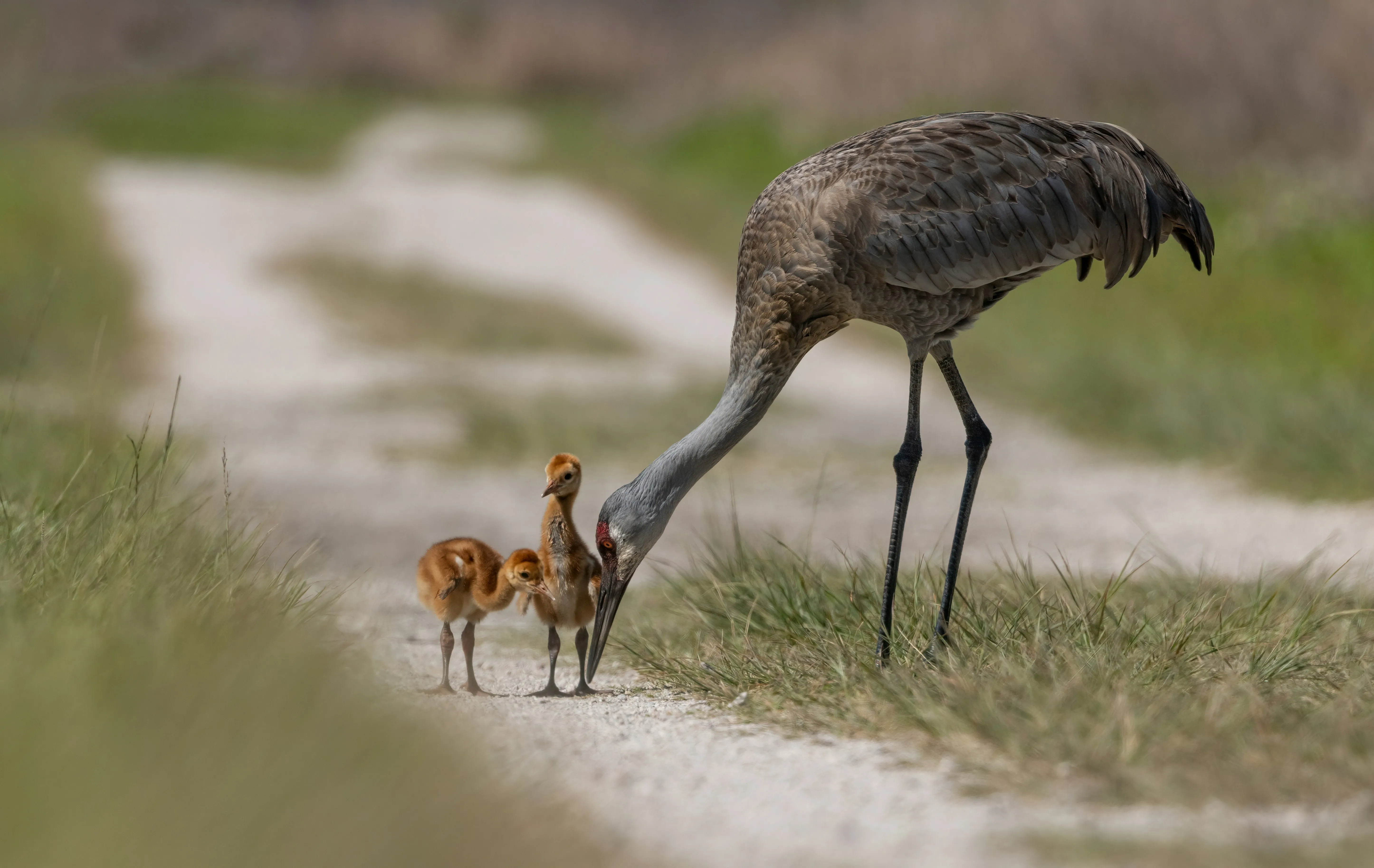
Fairbanks is at the intersection of migratory routes that connect four continents.
Sandhill cranes stage by the thousands at Creamer's Field, a 2,200-acre state refuge less than five minutes from downtown Fairbanks, before heading south along the Pacific Flyway. Arctic terns pass through the Interior on an annual circuit from Arctic to Antarctic and back, roughly 44,000 miles. Over 150 species have been documented at Creamer's Field alone. Across the state, the bar-tailed godwit breeds in western Alaska and flies nonstop to New Zealand and Australia, the longest unbroken flight of any animal on Earth. Alaska has 549 documented bird species as of the 2025 checklist, including the world's largest concentrations of shorebirds.
The Tanana Valley Sandhill Crane Festival has run for 28 years. The Arctic Audubon Society and Alaska Songbird Institute maintain active birding programs in the Fairbanks area.
North Star Grand Lodge is dedicating over 30 acres of its 187-acre site to a connected bird conservation sanctuary. Functional, restored habitat, planned from the start as part of the site design, built to support resident and migratory bird species native to Interior Alaska.
Boreal Haven (15 to 20 acres). The lower woodland preserves conifer understory and the patchy light conditions favored by boreal songbirds. Native berry-producing species (highbush cranberry, lowbush cranberry, prickly rose, dwarf dogwood) are planted to support thrushes, waxwings, finches, and other foragers. Downed wood is left for insects and cavity-nesting birds. Forest integrity is maintained with minimal intervention. Narrow, natural-surface toepaths run along the edge of sensitive zones, with signed rope borders restricting access during breeding season. Two elevated viewing blinds allow observation without disturbance.
Tundra Waters (8 to 12 acres). At the property's center, a multi-tier pond system and native sedge meadow provide freshwater habitat from spring breakup through fall freeze-up. Natural wetland filtration maintains water quality during the active season. Native sedges, grasses, and emergent vegetation support sandhill cranes, breeding waterfowl, and the insect base they depend on through the May-to-September window when these migratory species are present. Toepaths are set back from shoreline on firm ground. Two viewing blinds sit away from pond edges to reduce flush distance. Water levels are managed through our on-site water platform to maintain habitat through dry periods in the growing season. In winter, the ponds return to a frozen state consistent with natural Interior Alaska hydrology, and solids from the water treatment process are stockpiled and applied as soil nutrients during spring preparation.
Aurora Perch (5 to 10 acres). Along the eastern buffer and riparian corridor, dense native willow, alder, and spruce massing creates a sound and light buffer from developed areas while adding edge habitat. Nest structures are placed for species appropriate to Interior Alaska: swallow cups and boxes for tree swallows, boxes sized for goldeneye and bufflehead near water. Pollinator-friendly plantings lift insect diversity that in turn feeds birds. Educational signage along the corridor describes the restoration work underway.
Across all three zones: no feeding stations, no synthetic pesticides, maintenance timed around breeding windows, wildlife-friendly irrigation, and no dogs in the sanctuary.
Glass kills an estimated one billion birds annually in the United States. Research has found that the area of glass emitting artificial light at night is the strongest predictor of collision rates, independent of the total glass area on a building.
All exterior glass on the resort incorporates UV-reflective patterning integrated at manufacture. Birds perceive ultraviolet wavelengths that humans do not. The pattern follows the 2x4 rule: vertical spaces of two inches or less and horizontal spaces of four inches or less. This breaks up reflections so birds register the pane as solid while the pattern remains nearly invisible to guests.
Where geometry creates fly-through illusions (opposing glass walls, corners, transparent breezeways), visible cues such as narrow fins, mullion rhythm, and light-differential shading remove long sightlines.
During migration peaks, lights-out protocols will apply to nonessential glazing zones, and automated interior shades will cut reflections at dawn and dusk. A collision log will track strikes by pane, and any location showing repeated hits will trigger mitigation: shade changes, decals, or exterior cues.
A 2025 study in Science analyzed 4.4 million bird vocalizations across 583 species and found that light pollution extends daily vocal activity by an average of 50 minutes. Blue-rich light produces the strongest disruption. The campus lighting standards designed under our Dark Sky initiative address this directly: the same controls that protect the night sky protect the wildlife that depends on darkness.
All fixtures in habitat zones emit wavelengths above 560 nanometers, meeting the U.S. Fish & Wildlife Service recommendation for minimizing avian disorientation. Light intensity in habitat buffer areas does not exceed 2 lux, below the 6 lux threshold at which research documents significant wildlife behavioral changes. Blue light output across the campus is capped at 8% or less in the 380 to 500 nanometer range. Guest-facing windows with northern exposure use light-containment glazing and automated shading, because the northern face is both the primary aurora-viewing orientation and the primary vector for artificial light escaping into migratory flight paths.
The Lodge will house a migration desk with recent sightings, loaner optics, and guided-walk schedules. Guests will be able to submit species lists to eBird and other recognized birding databases. A naturalist team will curate first-of-season notes and notable movements on lobby screens. The program will serve locals as well as travelers.
Guided walks will run daily during spring and fall migration peaks, and on a published schedule through summer and winter. Four elevated viewing blinds and the toepath network across the three habitat zones will be accessible for birding and wildlife photography year-round.
In peak migration windows, the sanctuary can support species that make Interior Alaska globally significant: Arctic Tern, Bar-tailed Godwit, Sandhill Crane, Lapland Longspur, and Snow Bunting alongside the resident boreal community including boreal owl, great horned owl, gyrfalcon, willow and rock ptarmigan, pine grosbeak, and common redpoll.
In 2022, 96 million U.S. adults identified as birders. They spent $107.6 billion, including $14 billion on trip-related costs such as food, lodging, and transportation. Birding activity supported 1.4 million jobs and generated $279 billion in total economic output.
In Alaska, approximately 300,000 birders visited in 2016, spent $378 million, and supported roughly 4,000 jobs. Compared to other Alaska visitors, birders spend 56% more per person, engage in twice as many paid activities, and stay approximately four nights longer. Four in five arrive independently rather than by cruise. Half of Alaska's bird-tourism jobs are in the Interior region.
What birding resources or conservation priorities matter most to you in Interior Alaska? We want to hear from you.
Email: dan@northstargrandlodge.com
Daniel Keck
DX/DT LLC
Fairbanks, Alaska
What do you think? Join the conversation on our Facebook page.