
Finland has topped the World Happiness Report eight years running. Norway and Iceland are right behind. Same latitude as Fairbanks. Same darkness. Same cold.
These countries did not succeed despite their conditions. They invested in built environments designed around them: light, heat, community infrastructure, and a relationship with winter that turned it from an obstacle into an asset. Rovaniemi and Tromsø built year-round tourism economies from the same raw ingredients Fairbanks has. This initiative is about what that investment actually looked like, and what it returned.
The clearest example is Reykjavik.
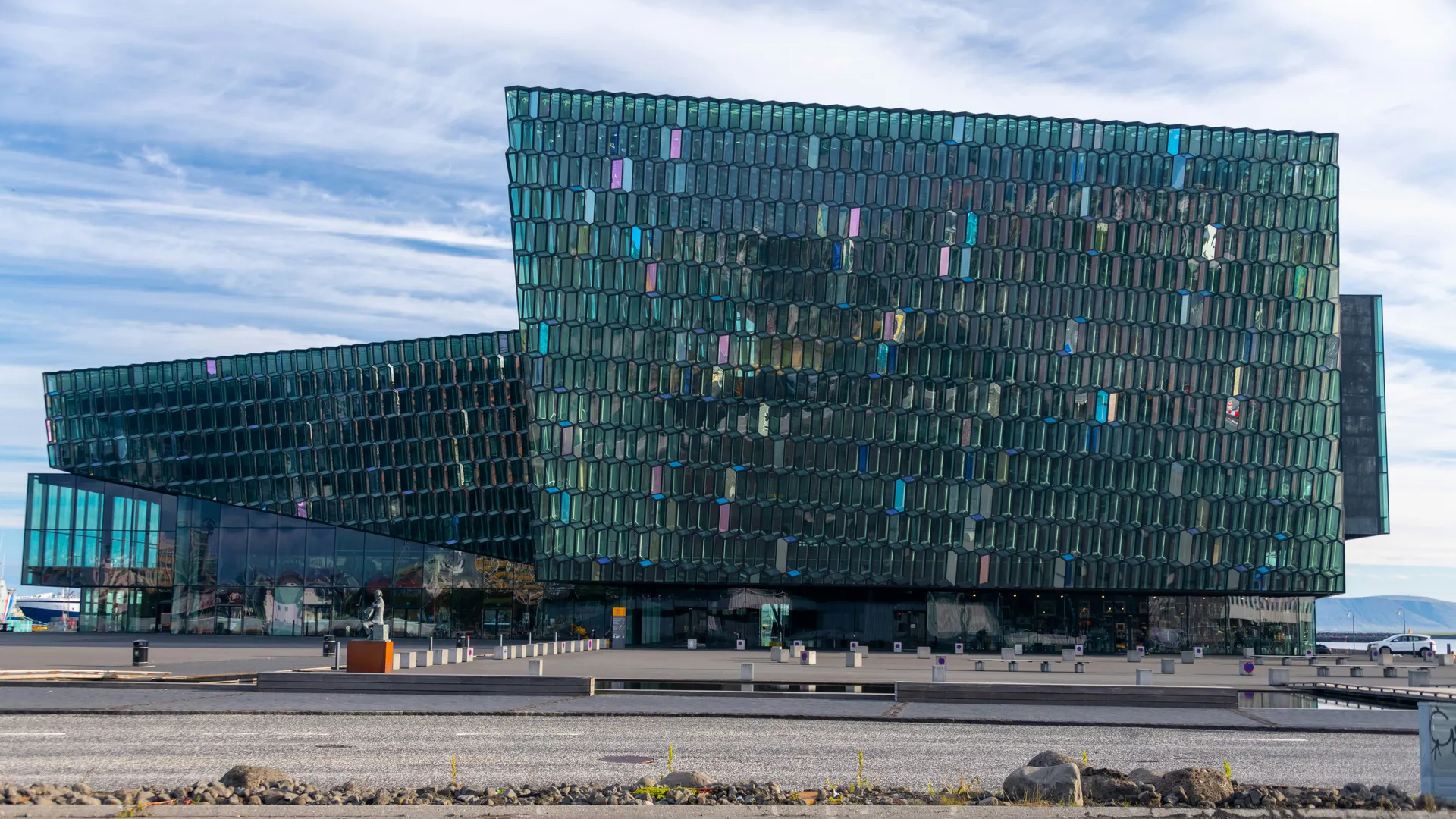
Harpa Concert Hall opened in 2011. It is a hybrid concert and conference venue with 71,000 square feet of conference space and an 1,734-seat main hall. It draws over 1.5 million visitors per year. It hosts 22 conferences annually with 500 or more attendees, bringing 16,000 international conference guests who spend twice as much as the average tourist. It generates tax revenues 15 times the level of its public operating subsidies. The building itself became a tourist attraction independent of its programming.
Reykjavik has a population of 140,000. Before Harpa, Iceland's economy was built on fishing and aluminum. Tourism surpassed both to become the country's largest export sector. Harpa did not cause that transformation on its own. But it gave the city a venue that could host the world, and the conference economy, the cultural programming, and the international visibility that followed changed what Reykjavik meant on the global map.
Compare that to Fairbanks. In Initiative 1, we described the gap: Anchorage has 285,000 square feet of purpose-built convention space. Fairbanks has a 5,100-seat arena built in 1990 with 9,200 square feet of meeting rooms. Conferences default to Anchorage. Events that could anchor Fairbanks's winter economy have nowhere to go.
Reykjavik had the same problem before Harpa. A subarctic capital with world-class natural assets, a growing tourism market, and no venue to capture the conference and event economy that was going elsewhere. They built one. It worked.
The design principles behind Harpa are the same ones that run through every successful Nordic subarctic investment: build for winter, not against it. Create spaces that draw people in during the months when the conditions are hardest. Layer cultural and economic infrastructure on top of the institutional base that already exists. Make the built environment worth traveling for.
Rovaniemi has Lappi Areena, a 4,780-seat multi-purpose venue that hosts concerts, hockey, and events year-round. Tromso invested in its waterfront and cultural district. These are not large cities with large budgets. They are small, cold, remote communities that decided the built environment mattered enough to invest in it.
Fairbanks has the same conditions. It has a stronger institutional base than any of them. What it doesn't have yet is the built environment to match.
What would a world-class venue do for Fairbanks? What events or gatherings do you wish could happen here but can't? Reply to dan@northstargrandlodge.com or weigh in on Facebook.
Daniel Keck
North Star Grand Lodge
Fairbanks, Alaska
What do you think? Join the conversation on our Facebook page.