
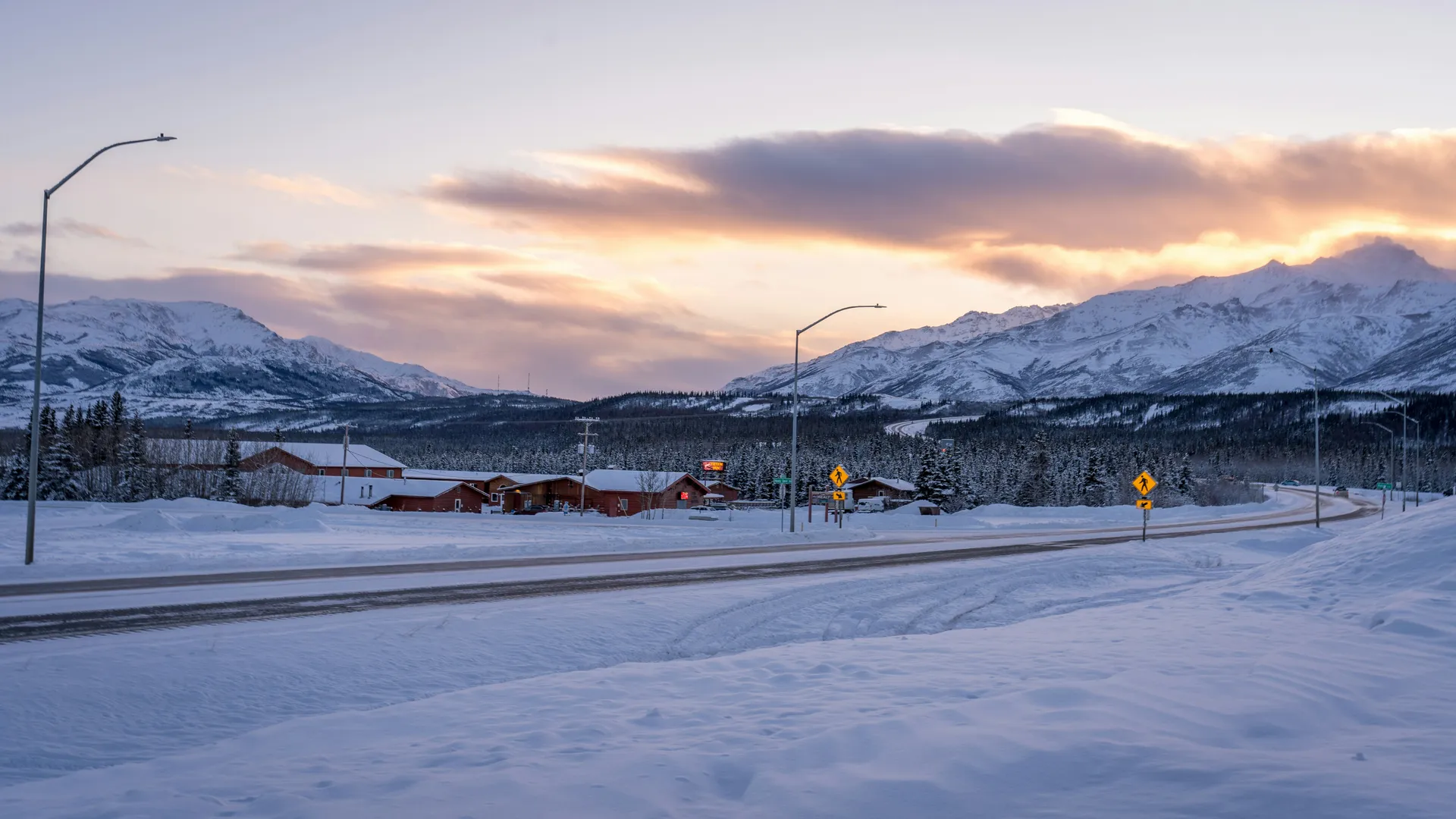
Americans spent more money chasing the northern lights last year than any year in history. Fairbanks is the premier American aurora destination. Most Americans went to Iceland, Finland, or Norway.
653,875 Americans visited Iceland in 2025, generating 1.53 million overnight stays, nearly a third of all foreign hotel nights in the country. Americans are the fastest-growing source market across the entire Nordic Arctic: overnight stays grew at a 27.1% annual rate in Arctic Norway from 2016 to 2024, 21.9% in Sweden, and 20.4% in Finland. Northern lights tourism globally is growing at 9.7% annually, projected to nearly double from $834 million in 2023 to $1.65 billion by 2030.
These were not always prosperous places. Iceland's economy nearly collapsed in 2008. Rovaniemi was a trading town of 6,000 people that was 90% destroyed in World War II and now records over a million overnight stays in a single winter season. They invested in destination infrastructure, and tourism became a catalyst for broader economic transformation. Finland now ranks #1 on the 2025 World Happiness Report and Iceland ranks #2. Alaska ranks #49 out of 50 on 2025 U.S. News Best States.
The Fairbanks hotel market today
The Reykjavik column below shows only the luxury and upper upscale tier, to illustrate the segment Fairbanks lacks entirely.
| Metric | Fairbanks (All Classes) | Reykjavik (Luxury & Upper Upscale Only) |
|---|---|---|
| Hotel rooms | 3,045 | 3,782 |
| Occupancy | 63.9% | 74.9% |
| ADR | $205 | $399 |
| RevPAR | $131 | $299 |
| Luxury rooms under construction | 0 (statewide) | 172 |
Source: CoStar, March 2026.
There is no AAA Five Diamond hotel anywhere in Alaska. Aside from North Star Grand Lodge, there are no luxury or upper upscale rooms under construction statewide. The entire Fairbanks market is midscale and upper midscale.
Hotel occupancy has declined from 68.6% to 63.9% over the trailing twelve months, but the decline is not driven by falling demand. Airport arrivals were flat to up 1% year over year through mid-2025, and Alaska Railroad passenger volumes to Fairbanks grew 5%. The occupancy erosion tracks instead to a growing oversupply of short-term rentals at the budget end: Airbnb and VRBO listings in the borough grew roughly 20% while their own occupancy fell from 37% to 33%, a saturation concentrated among price-sensitive travelers at the bottom of the market.
Four markets that closed the gap
Finnish Lapland. Starting around 2017, specialty aurora properties began entering the market: glass igloos near Rovaniemi, aurora lodges near Levi, rebuilt resorts designed around the winter sky. CBRE's 2025 Nordic Hotel Market Snapshot tracked the result across 94 hotels north of the Arctic Circle:
| Arctic Hub (Nov-Apr 2024/25) | RevPAR | Occupancy | Change Since 2018/19 |
|---|---|---|---|
| Rovaniemi, Finland | EUR 232 | 81% | RevPAR +100% |
| Tromso, Norway | EUR 156 | 81% | RevPAR +72% |
| Kiruna, Sweden | EUR 116 | 66% | RevPAR +86% |
| Arctic region overall | EUR 94 | 60% | RevPAR +40% |
Rovaniemi hit 97% occupancy in December 2024. Finnish Lapland recorded 1.6 million foreign overnight stays in 2024, up 18.5% since 2016. The new properties brought new visitors, and the visitor economy grew around them.
Iceland. International arrivals grew from 489,000 in 2010 to approximately 2.3 million in 2018. We described what Harpa did for Reykjavik's economy in an earlier initiative. Since 2015, Iceland has grown its hotel supply by 58% and the visitor economy has kept expanding alongside it. Americans have been Iceland's top source market in ten of the last eleven years.
Amangiri, Utah. Big Water, Utah has a population of around 450. Amangiri opened there in 2009 with 34 suites starting at $4,000 a night, in a remote desert whose streets weren't paved until 2002. The resort now employs roughly 250 people and contributes about 40% of Kane County's annual transient room tax. It is among the top property tax and sales tax contributors in the county. A single anchor property created a destination where none existed.
Big Sky, Montana. After luxury properties entered the market, led by Montage Big Sky in December 2021, lodging tax revenues grew more than 200% from their 2017 level. Big Sky became the largest collector of Montana's state lodging tax, surpassing destinations with far more inventory.
Finnish Lapland and Iceland were growing markets where new investment accelerated growth that was already underway. Amangiri and Big Sky are closer to Fairbanks: places where the visitor economy was small or nonexistent until an anchor property gave travelers a reason to come.
The academic evidence
Researchers at Cornell analyzed 14,995 U.S. hotels and found that for every percentage-point increase in luxury properties within a competitive cluster, midscale hotels gained measurable RevPAR, with the benefits flowing down the quality ladder rather than up. A separate study of the full U.S. hotel population confirmed the mechanism: same-tier entry compresses occupancy, but different-tier entry creates agglomeration benefits that grow the overall market.
A 27,000-hotel study of tourism clusters found that hotels in small-metro and town-scale clusters earn $7.90 to $10.90 more in RevPAR than identical properties outside clusters, with the presence of luxury product adding another $14.56.
A new Hampton Inn in Fairbanks would compete directly with existing midscale hotels for the same guests. A luxury resort entering at 3.7 times the market ADR and targeting travelers who do not currently visit is a fundamentally different proposition, and the research lines up with what the case studies show.
Applying this to Fairbanks
North Star Grand Lodge is designed for travelers who are largely not visiting Fairbanks today, and The Block generates events that would not occur here without the venue. Together, they bring new visitors, new spending, and new tax revenue into the local economy. At stabilization, the resort generates approximately $5.5 million in annual bed tax, expanding the borough's bed tax base by roughly 60%.
Alaska Airlines is building Seattle into a trans-Pacific hub, adding nonstop links to Tokyo and Seoul with plans for at least twelve intercontinental destinations by 2030. Fairbanks is two flights from major Asian capitals. The air access is catching up, but the infrastructure to receive these travelers has not.
What would a stronger visitor economy mean for your community? We want to hear from you.
Email: dan@northstargrandlodge.com
Daniel Keck
DX/DT LLC
Fairbanks, Alaska
What do you think? Join the conversation on our Facebook page.